
 | 22 Jan 2026
Combining interbasin water replenishment and solar capacities for sustainable energy and water management in the catchment of Lake Velence
Attila Kálmán
Máté Chappon
Katalin Bene
Climate change exerts substantial adverse effects on water resources within the catchment area of Lake Velence in Hungary, intensifying conflicts among stakeholders and diverse water users. This region, characterized by rapid urbanization and economic expansion, also exhibits ecological heterogeneity, including significant wetland areas, some designated as Ramsar sites. At the same time, population growth and modern real estate development have led to a high density of solar panel installations, resulting in above-average per-property renewable energy production capacity across the country. This study proposes an inter-basin water transfer system to mitigate the hydrological impacts of climate change, leveraging the area's topography and solar energy production potential by integrating pumped hydro storage reservoirs and surplus solar energy to transfer water from the adjacent Váli-víz watershed is considered. The ecological flow requirements of the donor area are also considered to protect its ecosystem. The objective is to design a sustainable, low-carbon water replenishment system that addresses the region's economic, social, and ecological requirements. By synchronizing excess solar energy production with pumped hydro storage systems, the approach ensures dual functionality: renewable energy storage and strategic water supply enhancement for Lake Velence, thus increasing the system and the area's resilience under climate stress.
- Article
(3832 KB) - Full-text XML
- BibTeX
- EndNote


Climate change has increasingly affected Europe over the past decade, marked by sudden flash floods and extreme summer droughts that depleted surface and groundwater resources (Leflaive, 2024). Agriculture is among the most severely impacted sectors, with reduced rainfall and increased evaporation leading to lower crop yields and threatening food security (EU Climate Adapt, 2025). These hydrological disruptions also influence a wide range of human activities and natural systems, including recreation, tourism, fishing, sports, and beach use, impairing ecosystem services and weakening local economies (Kálmán et al., 2024). In response to growing water scarcity, one practical approach is replenishing water in affected catchments through inter-basin water transfers. By redirecting water from surplus regions, it can provide short-term relief to the recipient area while ensuring long-term water supply security, thereby improving the operation of critical sectors like agriculture. Such interventions also introduce socio-economic and environmental risks, particularly due to the dependencies they create between donor and recipient basins (Duan et al., 2022). As a result, these transfers must be carefully managed to ensure sustainability, improve ecosystem services in the recipient region, and protect ecological integrity in the donor region (Zhong et al., 2023).
Climate change, compounded by social and economic pressures, has significantly altered the availability of water resources in Hungary's Central Transdanubian region, exacerbating water-related conflicts in the Lake Velence catchment area. With declining water resources and a growing number of water users – driven by increasing demand for water-related services – water scarcity is severe in many areas, negatively impacting biodiversity and ecosystem services (Purvis and Dinar, 2020). As climate models project no significant increase in annual rainfall alongside greater evaporation losses driven by rising temperatures (Kék Bolygó Alapítvány, 2022), stakeholders face a critical choice: either adapt to increasingly frequent periods of water scarcity, along with the accompanying economic and biodiversity losses, or seek external solutions to replenish local water resources. One such option is inter-basin water transfer, which, if carefully managed to respect the ecological flow requirements of the donor basin, poses minimal risk to the donor ecosystem (Faúndez et al., 2023).
Lake Velence is an ecologically unique and sensitive area, with parts under Natura 2000 protection and the Ramsar Convention on wetlands since 1979 (RAMSAR, 2025). Therefore, any water transfer must account for quantity and ecological quality, as measured by indicators such as aquatic biodiversity, nutrient concentrations, and sediment dynamics. These transfers affect hydrological processes, ecosystem services, and water regimes in both donor and recipient watersheds, requiring integrated, adaptive planning (Wang et al., 2024). This research aims to develop a sustainable, climate-neutral inter-basin water replenishment and management system adapted to the ecological, economic, and social context of the Lake Velence region. Utilizing the area's hilly terrain and high penetration of solar panels, the system will incorporate low-carbon pumped hydro storage to enable energy-efficient water transfers. Designed to minimize stakeholder conflicts and foster cross-sectoral cooperation, the solution will enhance water security while protecting the lake's ecological integrity. The proposed system will build long-term resilience for the Lake Velence catchment and offer a transferable blueprint for climate-adaptive water governance in similarly vulnerable regions that are socially, environmentally, and economically significant but sensitive.
The catchment of Lake Velence (Fig. 1) is located in Hungary's Central Transdanubia region, between the major cities of Budapest and Székesfehérvár. Covering a total area of 602.3 km2, the catchment includes hilly and flat terrains, parts of the Vértes and Velence Hills, and the Mezőföld region. It is divided into three sub-catchments: the Császár-víz watershed (383 km2), the Vereb–Pázmánd watercourse (105 km2), and a direct drainage area surrounding the lake (114.3 km2). Lake Velence is a shallow, saline water body with a surface area of 24.2 km2 and an average depth of 1.5 m, holding approximately 40 million m3 of water. The western part of the lake is covered with reeds, while the eastern side has larger open water surfaces and thus supports recreation and tourism. Due to the tight regulation, water levels are maintained between 130 and 170 cm. The lake is highly vulnerable to prolonged droughts and climate-driven hydrological stress. Over the past decade, climate change has intensified this vulnerability, as the available water within the watershed has been insufficient to replenish the lake when its level falls below the lower regulation threshold. Meanwhile, the role of Lake Velence within its catchment has become increasingly complex in the 21st century. It has developed as a seasonal recreational area, and has evolved into a suburban hub with substantial population growth and infrastructure expansion.
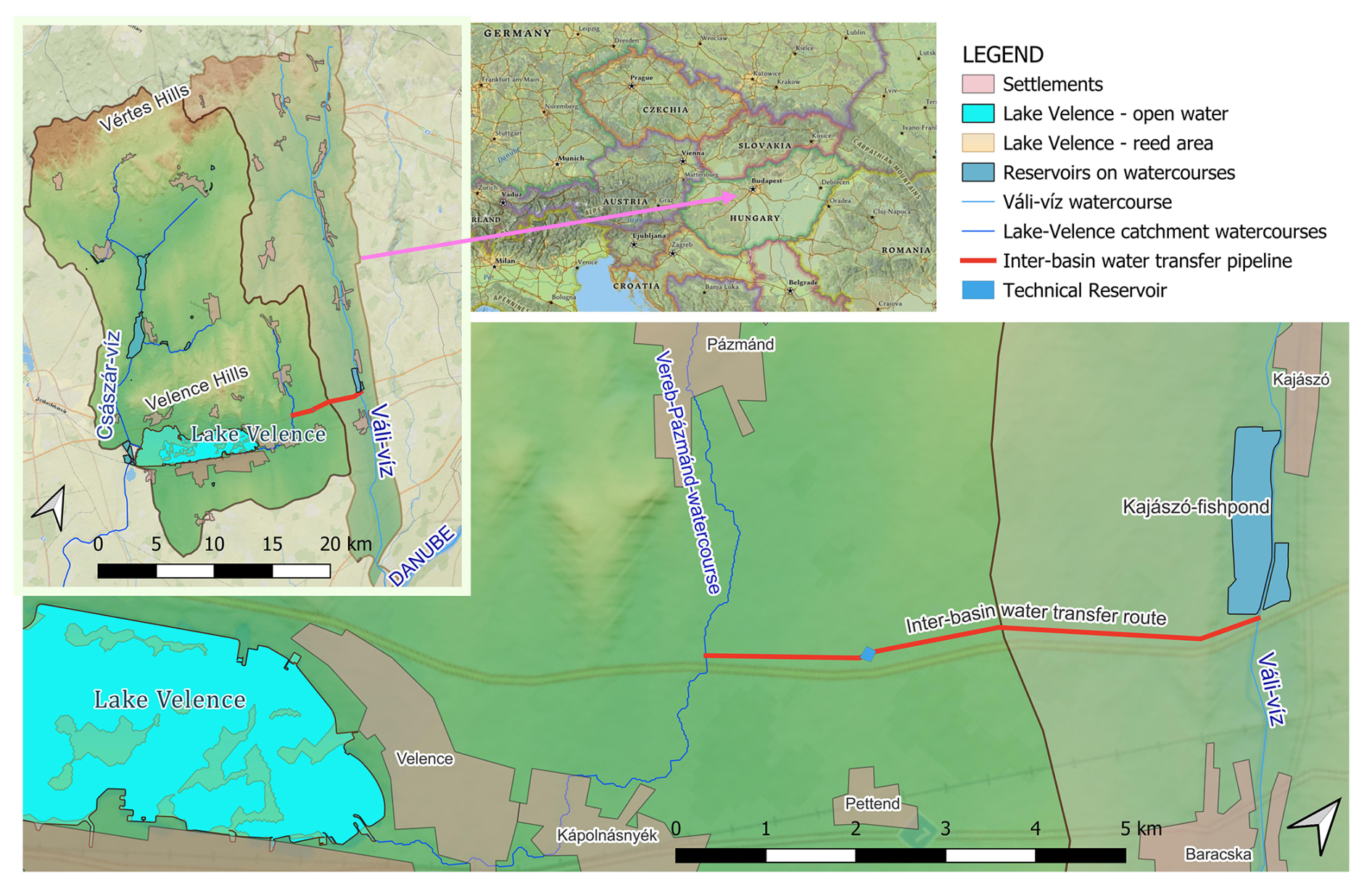
Figure 1Catchment of Lake Velence and the adjacent Váli-víz catchment, with the suggested inter-basin transfer (red line). (data sources: QGIS and VGT3 (2025), basemap: Esri | Powered by Esri – National Geographic; collection, processing, visualization: authors).
The expanding user base and human activities have placed additional pressure on local water resources and on the need for ecosystem restoration.
2.1 Water scarcity and water replenishment
Lake Velence, a geologically young lake estimated to be 12 000–15 000 years old, has historically dried up 14 times, with the last occurrence in the 19th century. Today, it faces long-term ecological decline without active water management intervention. From 1986 to 2020, the lake's water balance showed an annual average deficit of −1.0 cm. Annual average inputs from rainfall (+54.8 cm), catchment inflows (+32.3 cm), and reservoirs (+14.9 cm) were consistently exceeded by evaporation (−91.3 cm) and outflows (−11.7 cm). This persistent imbalance led to a significant loss of water volume, especially during the seven-year dry period ending in 2022. By 23 September 2022, the lake had dropped to a historic low of 53 cm, far below the regulated minimum of 130 cm. In 2025, water levels remain critically low, 73 cm on 19 December, half of the expected water depth, and competition among users has intensified, triggering stakeholder conflicts and accelerating ecosystem degradation.
Long-term water replenishment strategies have become central to regional water governance discussions in light of this growing crisis. Several potential donor sources have been considered, including karst wells from the Transdanubian Range, bank-filtered wells along the Danube, and treated municipal wastewater from settlements within the catchment. None of these options have been widely adopted, often due to economic, ecological, or logistical concerns. A less-explored yet potentially promising source is the Váli-víz stream, located just east of the Lake Velence catchment. (see Fig. 1). The middle section of the stream, which is the focus of this study for evaluating sustainable water availability, recorded a long-term average annual flow of 0.250 m3 s−1 between 1993 and 2020 (VGT3, 2025). Given its geographic proximity, hydrological stability, and favorable water quality characteristics, the Váli-víz stream may offer a more locally adaptable and climate-conscious solution for water replenishment (Rollason et al., 2022).
2.2 Stakeholder conflicts
In 2024, researchers from Széchenyi University conducted an online survey to assess perceptions, conflicts, opinions, and needs related to water use in the Lake Velence catchment. A total of 840 respondents from 89 settlements completed the questionnaire. Strong online engagement and a high response rate on voluntary questions reflect the public's deep interest in the lake and its management. Participants were classified into three groups: residents (57.3 %), holiday-home owners (18.8 %), and visitors or tourists (23.9 %). The survey results revealed that, for the population, Lake Velence serves dual roles as a natural wetland and a recreational water body, with stakeholders divided over future priorities in the context of water scarcity, as shown in Fig. 2 (SZE, 2025). Although nature conservation and ecosystem protection received substantial individual support (31.67 %), most respondents preferred to maintain both ecological and recreational functions (48.81 %). The survey revealed no clear consensus on whether ecological preservation or water-related tourism should take priority; instead, most participants supported a balanced approach that integrates both functions.

Figure 2Primary function of the lake, based on questionnaire survey. (datasource, evaluation, and visualization: authors).
The results underscore the diverse stakeholder interests and the need for integrated water management – including the implementation of a suitable water replenishment system – that balances ecological and socio-economic priorities.
This study builds on the authors' previous research, focusing on integrating available solar production in nearby settlements and protecting ecological flow requirements in the donor area (Kálmán et al., 2025a). The proposed water replenishment system links the Váli-víz stream (donor) with Lake Velence (recipient), with both located at roughly 100 meters above Baltic Sea level (mASL) and separated by a distance of approximately 10 km (see red line in Fig. 1). The replenishment system is designed with three main sections, each characterized by distinct hydraulic and topographic conditions. The first section, about 600 m long, ascends steeply from the reservoir at Váli-víz intake and is marked by significant hydrostatic head loss, requiring intensive pumping. The second section continues with a gentle rise, almost horizontal in alignment, extending approximately 3 km from the intake, where the system reaches its highest point (∼ 136 m a.s.l.), the second reservoir, and the end of pumping operations. From here, the third section descends naturally toward Lake Velence, with two moderate slopes and a gentle section between them. This downhill stretch enables energy recovery via turbine operation and provides a suitable point for merging the replenished water with the Vereb–Pázmánd natural watercourse along its existing route (Fig. 3).
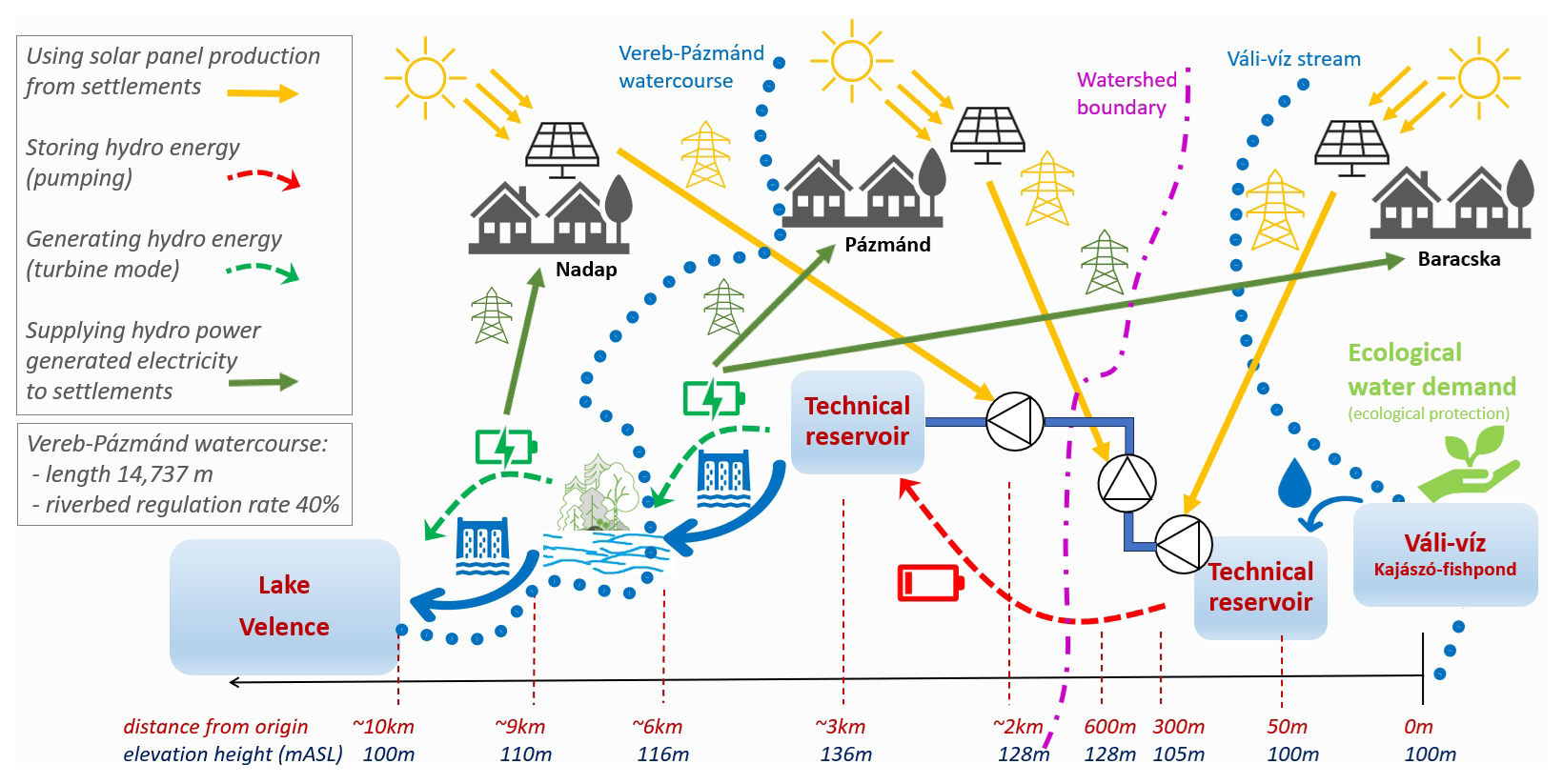
Figure 3Inter-basing water transfer system overview. (datasource: © Google Earth, collection, processing, visualization: authors).
The technical reservoirs function as short-term storage systems, ensuring water or energy availability during nighttime and overcast periods. The calculations are based on the average water resource data for 1992–2023, along with specific datasets from 2023, including available solar production data.
3.1 Determining available solar capacities
The water transfer system is designed to operate with zero carbon emissions by relying exclusively on solar power for water pumping. To support this, we selected three settlements along the transfer route with high solar panel installation rates based on official statistical data (KSH, 2025). Rooftop and ground-mounted solar panels in these settlements were identified using Google Earth's 3D mapping tool, and their locations were marked on a 2D map to assess their orientation, spatial distribution, surface areas, and thus their potential contribution to energy supply. Based on the production data set measured every 15 min of an existing 10.2 kW peak solar system with a 9 kW SolarEdge inverter and 33 m2 surface area, the total solar energy production (Esol in kWh) of the three settlements can be calculated by summing up the total installed solar panel surfaces, using Eq. (1).
where Ai [m2] is the surface area of the ith solar system, total of 181 systems with over 400 sub-surfaces were identified and measured; Aavr is the average solar panel size, set to 1.5 m2; Pavr is the power output of a single panel, set to 400 W; Eref is the daily energy production of the reference solar system in kWh; Pref,peak is the peak power output of the reference system, set to 10 kW; OFavr is the average orientation factor of each solar systems (value between 0–1), set to 0.85–0.95 depending on system layout; IFavr is the average inverter efficiency factor of each solar systems (value between 0–1), set to 0.95. Modifying factors during upscaling are the orientations of the solar panels and the efficiency rates of the inverters.
The inter-basin water replenishment system operates with three radial pumps that require a combined 16.5 kW, which defines the minimum operational power threshold (Ppup,op). To maintain carbon-neutral operation, the pumps run only when solar output exceeds this level. Analysis of solar data showed that this condition occurred at about 1.6 % of peak output; to account for variability, a 2 % operational threshold was applied, representing the minimum reliable solar energy production – 20.5 kWh – for pump operation. Solar power above this threshold was calculated for the first day of each month using 15 min data, and daily operating times (Tm,d) for the remaining days were estimated by linear interpolation, as shown in Eq. (2):
where subscript m refers to mth month and d to a certain day (1–28/31); Dm is the number of days in the concerned month.
The cross-section of the replenishment pipeline system and the specifications of the radial pumps were optimized using hydrodynamic modeling (Kálmán et al., 2025b), from which the flow rate (Q) of the transfer system was derived. Knowing the operating time of the pumps (Tm,d), the volume of water (Vtrans) transported through the inter-basin replenishment system can be calculated using Eq. (3). This volume increases the water supply of Lake Velence through the Vereb-Pázmánd watercourse.
where Q is the flow rate of the replenishment system, set to 0.12 m3 s−1 based on hydrodynamic optimization; fop is the operation factor of the pumps, set to 83.3 % based on pump optimization aimed at minimizing hydrodynamic head loss.
3.2 Determining surplus flow (for inter-basin transfer) in the donor stream
To determine the surplus flow available for water transfer, it was necessary to define both the ecological and exploitable flow components of the donor stream. The Váli-víz stream is already heavily utilized – primarily by fish farms and ponds – thus a do-no-harm approach was required. Chappon et al. (2025) introduced a new hydrological methodology for calculating the ecological flow requirements and exploitable water resources of Hungarian streams. For medium-sized catchments (100 km2 < Acatchment < 1000 km2), the minimum ecological flow is computed based on 30 years of observed daily flow data using Eq. (4).
where Qeco-min,i is the minimum ecological flow for the ith month; Q97 %,i is the 97th percentile average daily flow rate for the ith month; Q90 %,i is the 90th percentile average daily flow rate for the ith month.
The maximum exploitable flow is calculated using Eq. (5).
where Qexp-max,i is the maximum exploitable flow for the ith month; Q80 %,i is the 80th percentile average daily flow rate for the ith month; Qeco-min,i is the minimum ecological flow for the ith month.
The transferable water volume from the donor basin to the recipient area for a given day j in 2023 is the lesser of two flows: (1) the maximum exploitable flow or (2) the observed daily flow minus the minimum ecological flow, as shown in Eq. (6). No water transfer is allowed if the observed daily flow is below the ecological minimum.
where Qtransfer 2023,j is the possible water transfer from Váli-víz towards Lake Velence on the jth day of the year; Qobserved 2023,j is the measured daily mean flow in the Baracska section of Váli-víz (datasource: VGT-OVF).
To assess the feasibility of a solar-powered inter-basin transfer system, we analyzed solar energy potential and water resources along the Váli-víz–Lake Velence route. The study evaluated solar production reliability for pump operation in three settlements and examined whether flow in the Váli-víz stream is sufficient for extraction, considering ecological flow requirements. The results show the relationship between solar production, pump operation, and water availability.
4.1 Solar capacities
The annual solar energy production near the water replenishment route was ∼ 1380 MWh in 2023, with large fluctuations throughout the year. The lowest daily solar energy output was only 44 kWh on a snowy December day. The highest was 7655 kWh in June. Figure 4 shows the daily energy production in the settlements and the 7 d moving averages (red line). Though annual total solar energy production is relatively balanced (∼ 1380 MWh in 2023, ∼ 1425 MWh in 2024 and ∼ 1390 MWh expected in 2025), the lowest daily output (∼ 20 kWh in 2023, ∼ 44 kWh in 2024, ∼ 30 kWh in 2025 assosciated with snowfalls) and the lowest 7 d averages (∼ 4 MWh in 2023, ∼ 2.2 MWh in 2024, ∼ 1.5 MWh in 2025 assosciated with long-lasting fog) greatly vary. Although the probability of a long-term solar drought is low, its impact is significant, as it typically occurs during winter, when water resources are abundant. This effect can be offset by increasing the reservoir in the donor area.
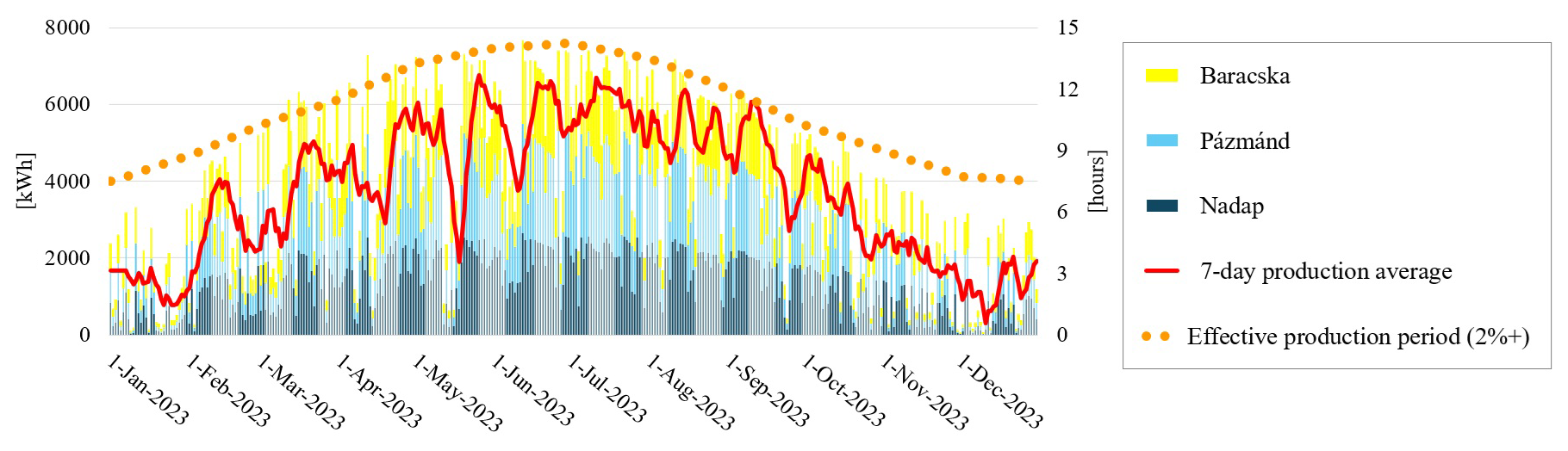
Figure 4Solar production in the three settlements en route to the inter-basin water replenishment pipe system. (Source: authors).
Beyond total solar energy production, the effective period above the 2 % operational threshold, calculated using 15 min data, is equally critical for system operation. This daily period (orange dotted line in Fig. 4) varied seasonally from roughly 7.5 h in late December to 14.25 h in late June. To ensure carbon-neutral operation, pumps function only when solar output exceeds the 2 % threshold. A further operational limitation is the availability of extractable water in the donor catchment.
4.2 Water resources
The potential water transfer capacity from the Váli-víz stream was calculated for both an average hydrological year and for 2023. The results were similar, indicating a consistent water surplus in the Váli-víz stream, even though the method applied by Chappon et al. (2025) used a more stringent ecological flow criterion than Hungary's current low-flow regulation. In 2023, the exploitable water volume was approximately 1.27 million m3, with a daily peak of 8044 m3 in February. Temporary flow limitations occurred in May, July, August, September, and October, when discharge dropped below the ecological threshold. Considering that 250 000 m3 of inflow raises Lake Velence's water level by 1 cm, the 2023 surplus alone could have contributed to an estimated 5 cm increase in lake level.
Alongside water transfer, preserving the donor catchment's ecological integrity remains essential. The residual flow, Qresidual (observed minus transferred discharge), showed only a 9 % reduction in mean annual flow compared with natural conditions. Medium and high flows (Q>0.5 m3 s−1) were maintained year-round, with an average daily reduction of 5 %. On 71 d (∼ 20 % of the year), Qresidual equaled the minimum ecological flow, and on only 6 d in 2023 (five in May, one in October), discharge fell below this threshold, resulting in zero potential transfer.
4.3 Combining solar power with water resources
In 2023, the available water for inter-basin transfer above the ecologically sustainable volume from the Váli-víz catchment was 1 274 141 m3, similar to the average for the 1992–2023 period of 1 387 411 m3.
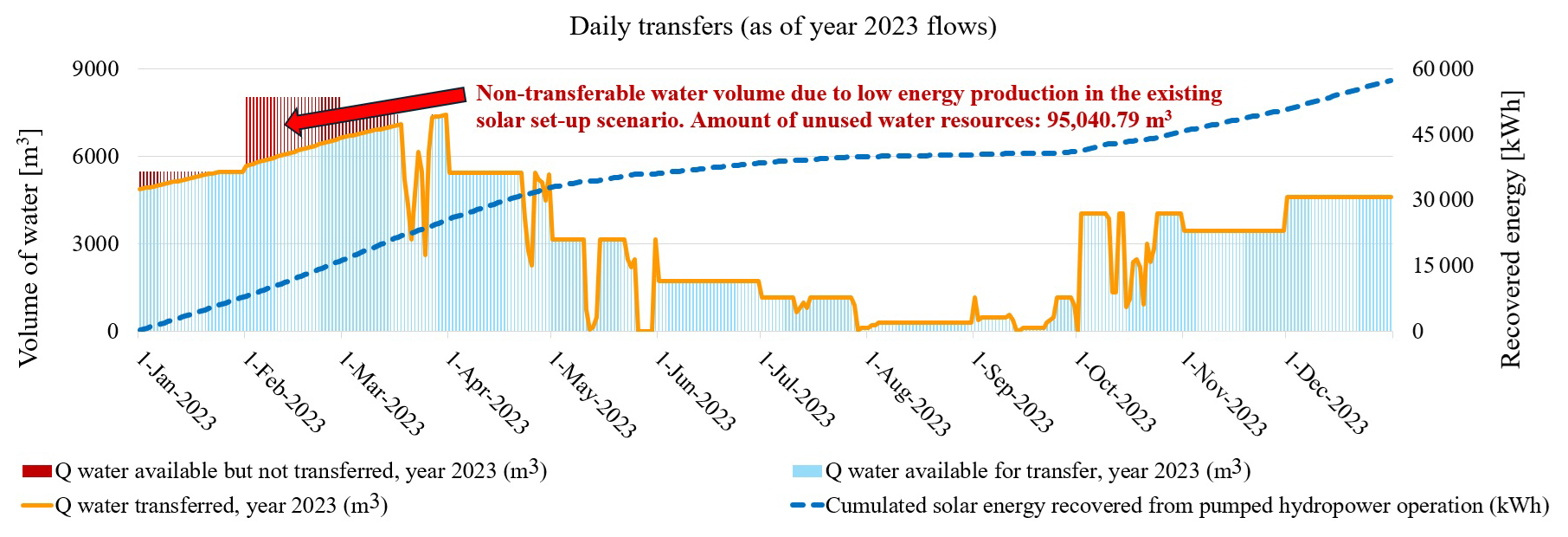
Figure 5Possible water transfers from Váli-víz towards Lake Velence in 2023, considering time-varying ecological flow requirements, an upper limit on extractable water resources, and recoverable solar energy as hydropower. (Source: authors).
In 2023, about 1.18 million m3 (≈ 92.5 %) of the available water could be transferred using the solar-driven pumping system, while only 7.5 % (95 041 m3) remained in the donor riverbed due to insufficient solar energy during peak flow periods in early January and February. As a result, the transferable water could raise the water level of Lake Velence by approximately 4.7 cm, which is consistent with the 5.2 cm average annual increase recorded between 1992 and 2023 (Fig. 5). With the integration of solar energy, assuming a 70 % round-trip efficiency of the hydropower configuration, annually ∼ 57.4 MWh from stored potential energy in upper reservoir could be recovered for nighttime operation, improving energy security and supply balance. This green energy output equals about 40 average-sized family households' annual electricity demand. The results confirm the technical feasibility and environmental benefits of combining inter-basin water transfer with solar energy. The Váli-víz–Lake Velence system can achieve sustainable water replenishment without compromising the ecological integrity of the donor catchment. Solar panels ensure low-carbon operation and address the intermittency of solar generation by enabling short-term storage of excess energy, thereby improving the stability of both water and energy systems.
Table 1Efficiency of water replenishment system – available and transferable water volumes.

With existing solar capacity capable of transferring over 90 % of the transferable water, the system operates effectively without needing large-scale reservoir infrastructure (Table 1). This highly efficient and scalable approach offers a resilient solution for adapting to climate change-induced water scarcity while maintaining ecological balance in donor and recipient areas.
Lake Velence, partly protected as a Ramsar site, lies in a rapidly urbanizing, ecologically diverse region with growing water and energy demands and high solar panel penetration. At the same time, climate change is increasingly affecting water availability in the Lake Velence catchment area in Hungary, leading to mounting tensions among local water users. To address this, a solar-powered inter-basin water replenishment system has been proposed to transfer surplus water from the neighboring Váli-víz watershed. The geographic proximity of donor and recipient areas, and the well-defined, steep layout of connecting pipe sections, improve the efficiency of pump and turbine operations, thus helping balance fluctuations in solar production with storage. Hydrological stability and favorable water quality characteristics are of great importance to ecology and system design. The results show that about 90 % of the ecologically available water – 1.2–1.3 million m3 annually – can be transferred, raising the lake's level by an average of 5.2 cm yr−1. Over 32 years, this would yield a cumulative rise of 165 cm, exceeding the lake's current water deficit. The system protects the donor basin's ecosystem while considerably improving water availability in the recipient area. Beyond its technical and ecological benefits, the water transfer project has the potential to significantly reduce tensions among competing water users in the Lake Velence region by ensuring a more equitable and secure distribution of resources. This integrated water-energy approach strengthens regional adaptation, reduces resource conflicts, and widely supports sustainable development by environmental protection, social equity, and economic stability.
The data presented in this study are available on request from the corresponding author.
Conceptualization: AK and MC; Formal Analysis: AK and MC; Investigation: AK and MC; Methodology: AK, MC and KB; Resources: KB; Software: AK and MC; Supervision: KB; Visualization: AK; Writing – Original Draft: AK and MC; Writing – Review and Editing: KB. All authors have read and agreed to the published version of the manuscript.
The contact author has declared that none of the authors has any competing interests.
Publisher's note: Copernicus Publications remains neutral with regard to jurisdictional claims made in the text, published maps, institutional affiliations, or any other geographical representation in this paper. The authors bear the ultimate responsibility for providing appropriate place names. Views expressed in the text are those of the authors and do not necessarily reflect the views of the publisher.
This article is part of the special issue “European Geosciences Union General Assembly 2025, EGU Division Energy, Resources & Environment (ERE)”. It is a result of the EGU General Assembly 2025, Vienna, Austria & Online, 27 April–2 May 2025.
The research presented in this paper was carried out within the framework of the Széchenyi Plan Plus program with the support of the RRF-2.3.1-21-2022-00008 project.
This paper was edited by Giorgia Stasi and reviewed by two anonymous referees.
Chappon, M., Janák, E., Szilágyi, F., Szalay, M., and Bene, K.: Környezeti vízigények meghatározásának operatív módszertana (Method for determining environmental flow), Hidrol. Közl., 105, 13–31, https://doi.org/10.59258/hk.20604, 2025.
Duan, K., Caldwell, P. V., Sun, G., McNulty, S. G., Qin, Y., Chen, X., and Liu, N.: Climate change challenges efficiency of inter-basin water transfers in alleviating water stress, Environ. Res. Lett., 17, 044050, https://doi.org/10.1088/1748-9326/ac5e68, 2022.
EU Climate Adapt: Drought and water scarcity, https://climate-adapt.eea.europa.eu/en/observatory/topics/health-impacts/drought-and-water-scarcity, last access: 14 December 2025.
Faúndez, M., Alcayaga, H., Walters, J., Pizarro, A., and Soto-Alvarez, M.: Sustainability of water transfer projects: A systematic review, Sci. Total Environ., 860, 160500, https://doi.org/10.1016/j.scitotenv.2022.160500, 2023.
Kék Bolygó Alapítvány: Proposal for Sustainable Water Replenishment of Lake Velence, https://kekbolygoalapitvany.hu/uploads/2022/04/velencei-to-vizpotlas.pdf, last access: 3 June 2025 (in Hungarian).
Kálmán, A., Chappon, M., and Bene, K.: The importance of economic evaluation in water management decisions – a case study in the watershed of Lake Velence, Proc. 13th HydroCarpath Int. Conf., Vienna, https://drive.google.com/file/d/1wjKv9dBQlhY718QfvZhXrwGtuNQADoAX/view (last access: 21 September 2025), 2024.
Kálmán, A., Bakonyi, A., Chappon, M., and Bene, K.: Optimizing inter-basin water transfer for sustainable energy management and multipurpose water utilization, Adv. Sci. Techn., 165, 297–309, https://doi.org/10.4028/v-xMEqF4, 2025a.
Kálmán, A., Chappon, M., and Bene, K.: Combining interbasin water replenishment and solar capacities for sustainable energy and water management in the catchment of Lake Velence, EGU General Assembly 2025, Vienna, Austria, 27 April–2 May 2025, EGU25-19915, https://doi.org/10.5194/egusphere-egu25-19915, 2025b.
KSH (Hungarian Central Statistical Office): Census 2022, https://nepszamlalas2022.ksh.hu/en/, last access: 2 October 2025.
Leflaive, X., The economics of water scarcity, OECD Environment Working Papers, 239, https://doi.org/10.1787/81d1bc0a-en, 2024.
Purvis, L. and Dinar, A.: Are intra- and inter-basin water transfers a sustainable policy intervention for addressing water scarcity?, Water Secur., 9, 100058, https://doi.org/10.1016/j.wasec.2019.100058, 2020.
RAMSAR: Convention on Wetlands: The list of wetlands of international importance (Ramsar list), https://www.ramsar.org/document/list-wetlands-international-importance-ramsar-list, last access: 14 June 2025.
Rollason, E., Sinha, P., and Bracken, L. J.: Interbasin water transfer in a changing world: A new conceptual model, Prog. Phys. Geogr.: Earth Environ., 46, 371–397, https://doi.org/10.1177/03091333211065004, 2022.
SZE: Research report on the results of the 2024 questionnaire survey (in Hungarian), Széchenyi University, Department of Transport and Water Infrastructure, https://www.facebook.com/share/p/1BuxMqq9Xu/, last access: 15 June 2025.
VGT3 – General Directorate of Water Management: Magyarország vízgyűjtő-gazdálkodási terve (Hungary's river basin management plan), https://vizeink.hu/vizgyujto-gazdalkodasi-terv-2019-2021/vgt3-elfogadott/, last access: 21 April 2025.
Wang, L., Wei, W., Sun, G., Fu, B., Chen, L., Feng, X., and Ciais, P.: Effects of inter-basin transfers on watershed hydrology and vegetation greening in a large inland river basin, J. Hydrol., 635, 131234, https://doi.org/10.1016/j.jhydrol.2024.131234, 2024.
Zhong, H., Liao, T., Fang, G., Ren, K., and Zhang, S.: Exploring optimal joint operating rules for large-scale inter-basin water transfer projects with multiple water sources, diversion routes, and water demand areas, J. Hydrol.: Reg. Stud., 49, 101504, https://doi.org/10.1016/j.ejrh.2023.101504, 2023.